Dancing on Clouds: The Neuromagic of Movement
What if a missed step, an awkward movement, or a moment of confusion was not simply a mistake, but a sign that you were challenging your brain to learn? For people with Parkinson's, this is the hope of neuroplasticity - or what I like to call “Neuromagic”.
A couple of years ago, I attended a Power for Parkinson's Stand Up exercise class. When I looked around the room, I saw only one other participant. I assumed the instructor might cancel the class. She didn't. Instead, she smiled and said, “Let's do this.”
The Science Behind the Magic. Neuroplasticity is the brain's amazing ability to adapt, reorganize, and strengthen connections through purposeful, repeated activity. In basic terms, the brain controls movement and repetition builds pathways.
Exercise is an important part of managing Parkinson's. It can help maintain or improve mobility, strength, flexibility, and balance - all of which affect quality of life. As the brain and body practice movements repeatedly, they have more opportunities to learn and adapt.
Every Movement has a Purpose. During the class, we:
Crossed the body's midline.
Worked through stiffness and rigidity.
Practiced walking and standing.
Raised our heart rates.
Strengthened our muscles.
Challenged our balance.
Practiced dual-task movements.
It may have looked like an exercise class, but much more was happening.
Weaknesses or Opportunities. During class, one participant spoke about their strengths and weaknesses. They were encouraged to think instead about their strengths and opportunities.
That small change in language captured the spirit of the class. Parkinson's can make it easy to focus on what has become difficult. Neuroplasticity encourages us to see those difficulties as opportunities to practice, adapt, and improve.
Did I feel awkward when I missed a movement or became confused by a pattern? You bet I did. But a mistake does not mean we are failing. It may mean we are challenging the brain and giving it an opportunity to learn.
When a movement becomes easy, the instructor makes it harder by adding a larger motion, a faster pace, another step, or a second task. The goal is not perfection. The goal is to keep challenging the brain and body.
Progress may take time, but repetition is where much of the Neuromagic happens. If you struggle with something in class, you can practice it again later using one of Power for Parkinson's many free exercise videos on YouTube.
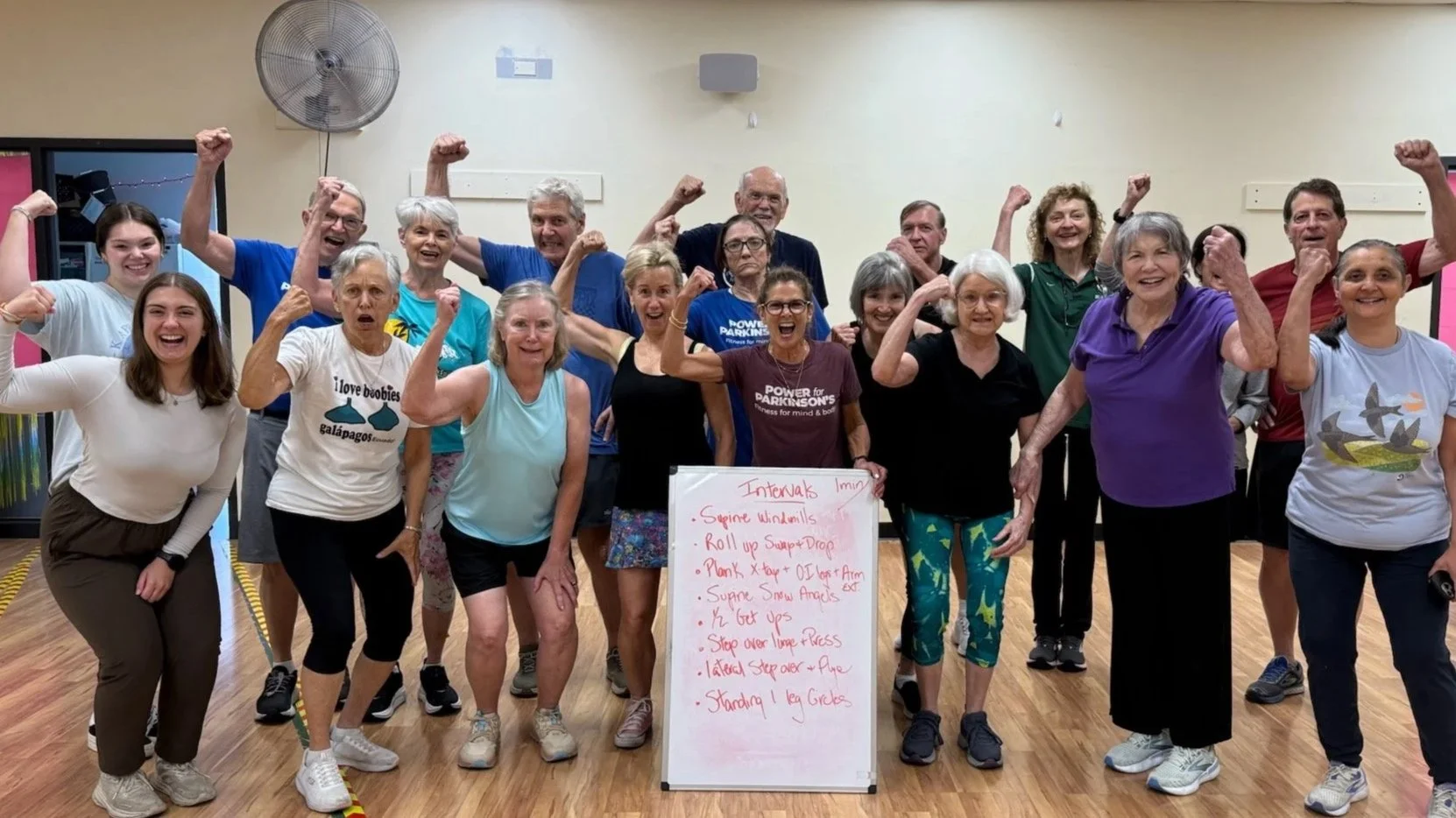
More Than an Exercise Class. Today, I continue to attend the same class with ten times as many people exercising together. The room is filled with movement, determination, laughter, and encouragement. It reminds me that something powerful happens when people with Parkinson's come together and exercise.
Near the end of class, I noticed something else.
People were smiling. They were talking with one another. The serious expressions I remembered seeing in the past had been replaced by energy and connection.
The class was doing more than building stronger bodies. It was creating community and hope.
That may be one of exercise's greatest gifts. Parkinson's can sometimes make our world feel smaller. A welcoming class opens it again. We discover people who understand the challenges, celebrate our efforts, and remind us that we do not have to face Parkinson's alone.
Keep Working Toward What Is Possible. The secret is out: our brains and bodies can learn and adapt. Exercise is not a cure for Parkinson's, but it is a powerful part of living well with the disease.
Follow modifications that keep you safe while still providing an appropriate challenge. Follow the right type and level of exercise for you and…
Show up.
Practice.
Challenge yourself.
Encourage others.
Repeat.
Neuroplasticity is real. Movement and repetition may create the magic and help push back Parkinson’s, but it’s our hard work that gives us hope and keeps us working toward what is possible giving us the opportunity to feel as though we are dancing on clouds.