

It’s All About the Rally: Power for Parkinson’s Table Tennis Program Reaches 200 Classes
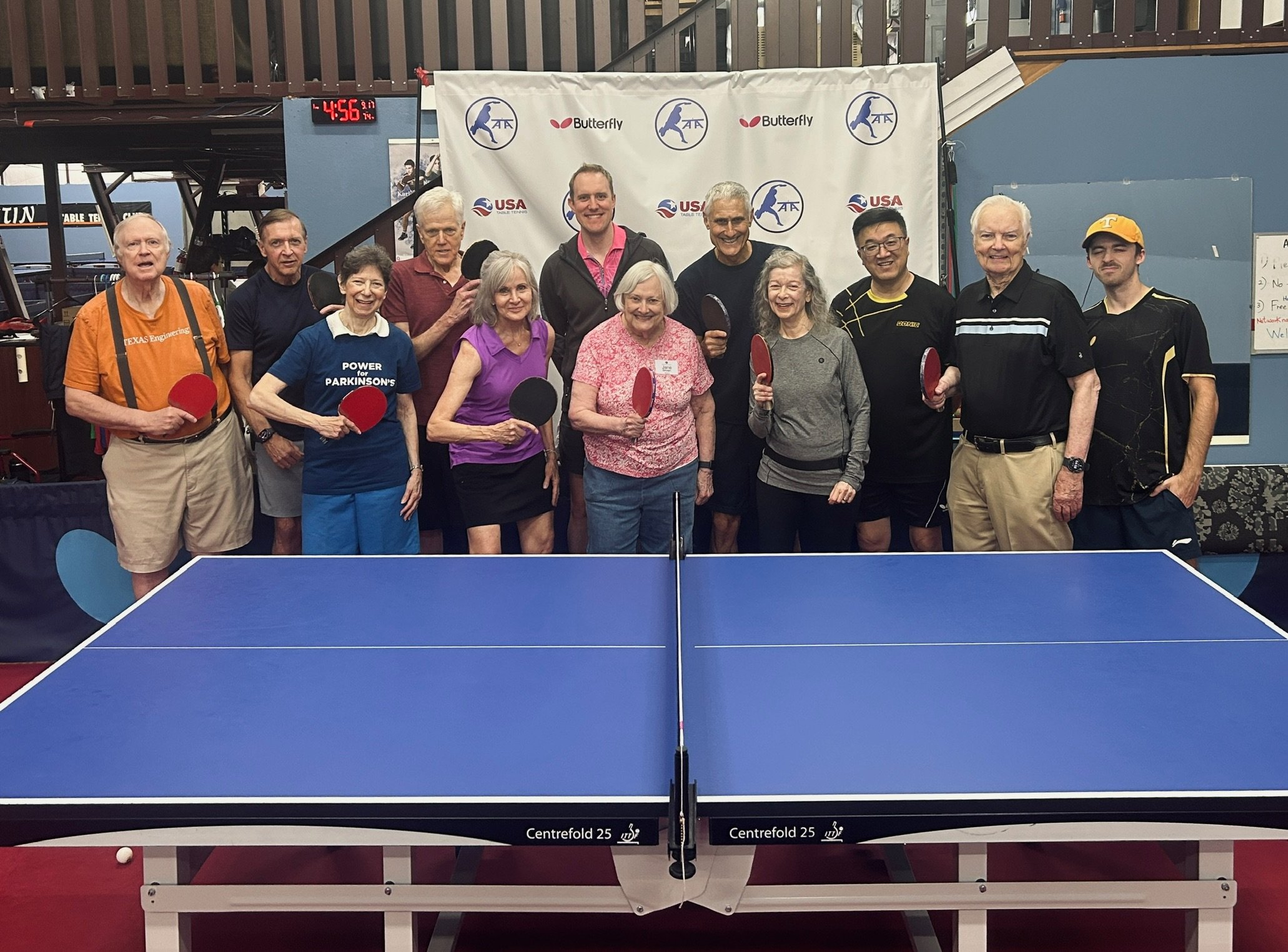
Power for Parkinson’s ping-pong is celebrating a milestone this week: 200 classes. Every Wednesday afternoon, the Austin Table Tennis Center is alive with the sound of balls in motion. Also in motion: a large group of people with PD rallying back and forth.
The program was founded by coach Clayton Pavlicek. Four years ago, he was looking for ways to bring different age groups and communities into the table tennis world. After meeting the founder of Ping Pong for Parkinson’s at a tournament, he researched Parkinson’s resources in Austin and was connected to Power for Parkinson’s. In 2022, the class was born.
The first sessions were small, with just two or three participants. “It grew nice and slow,” says Pavlicek, who now fills seven tables for each class. “A few of the participants have been here since the teens and now we’re at 200.”
That steady growth rests on a simple philosophy: movement is key. In Pavlicek’s class, players rotate partners every five minutes, so everyone is hitting, moving, and conversing with someone new. And no one is keeping score.
“If they can land it or they can’t land it – I don’t care,” he says. “You just serve it and play as you can. As long as they’re moving and hitting we’re doing the right thing.”
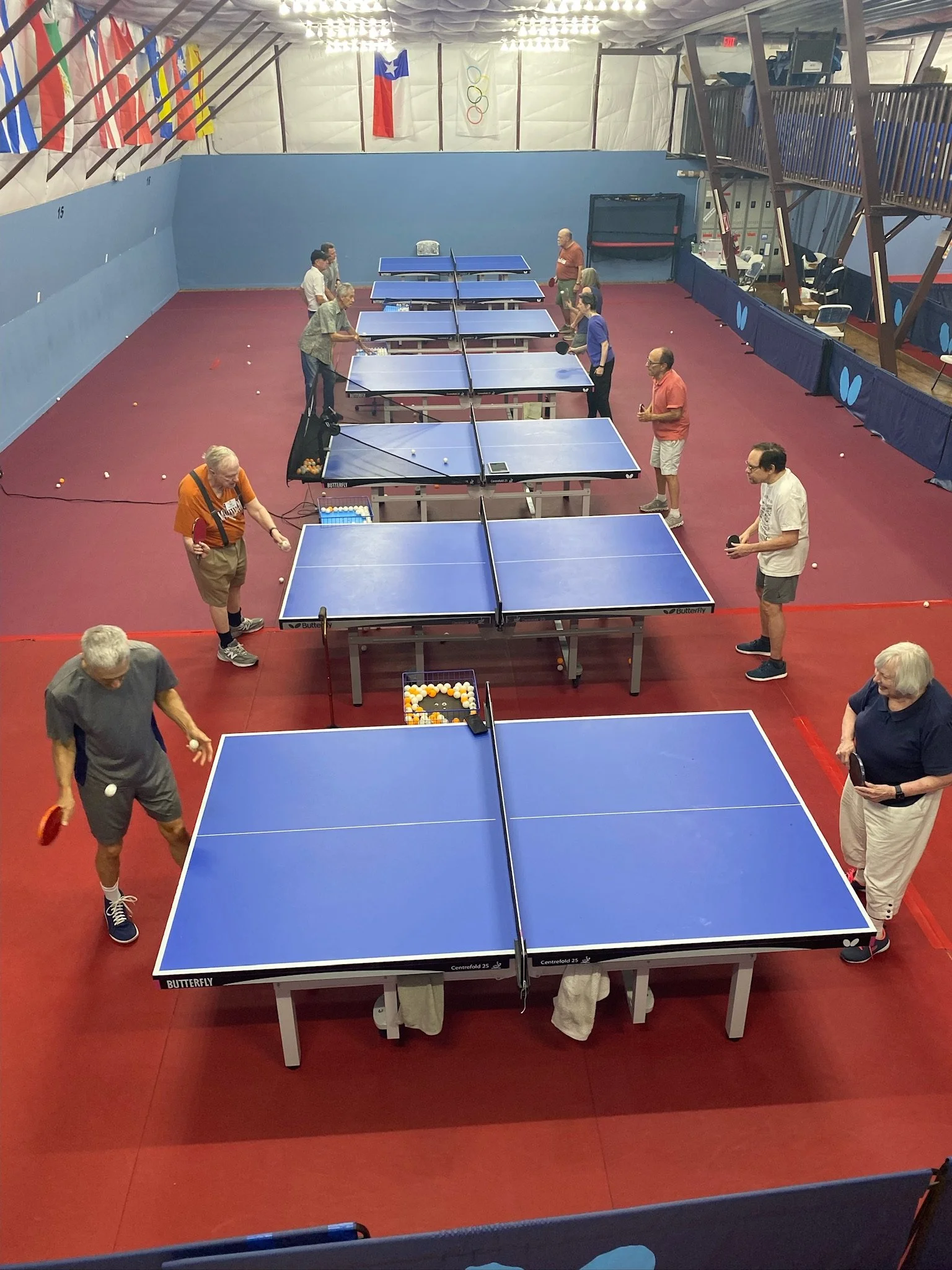
The rotation has a delightful side effect. Because partners change so often, the game never gets boring, and every new pairing is a chance to chat and catch up – either with fellow participants or volunteers, like Tom Fleshman and Joey Tsai, who are a fixture in the class. As staffers and coaches walk around scooping balls off the floor, we hear social bonds forming, connections growing, and friends supporting each other.
That social element, Pavlicek has found, matters as much as the physical benefits. After years of leading table tennis programs with older adults, including at independent living centers, he sees the interpersonal side of the class as essential.
“The emotional and networking connections are just as important as anything physical we do in the class to keep their positivity up and to keep them activated on the good days and the bad days,” Pavlicek says. “Some days, a player will arrive and say ‘Hey Clayton, the drugs aren’t good today,’ and I’ll say ‘just try to hit a few balls.’ Even on a tough day, a player can think, ‘Yeah, my table tennis might not be good, but I get to talk to these people.’”
That, Pavlick believes, is a key reason people keep coming back year after year.
The neurological benefits of table tennis for people with Parkinson’s are well established. It’s an activity that improves balance and hand-eye coordination, challenges players to move quickly, forces truck rotation to combat rigidity, increases neuroplasticity, and boosts executive function in the brain. Pavlicek witnesses those benefits in action every week.
“I see them gaining more control,” he says. “Some players who couldn’t hit the ball at all in their first class can now rally with newcomers. More experienced players work on their footwork and transitions, purposefully moving their bodies around the table. Anytime we’re getting purposeful motion, that’s great.”
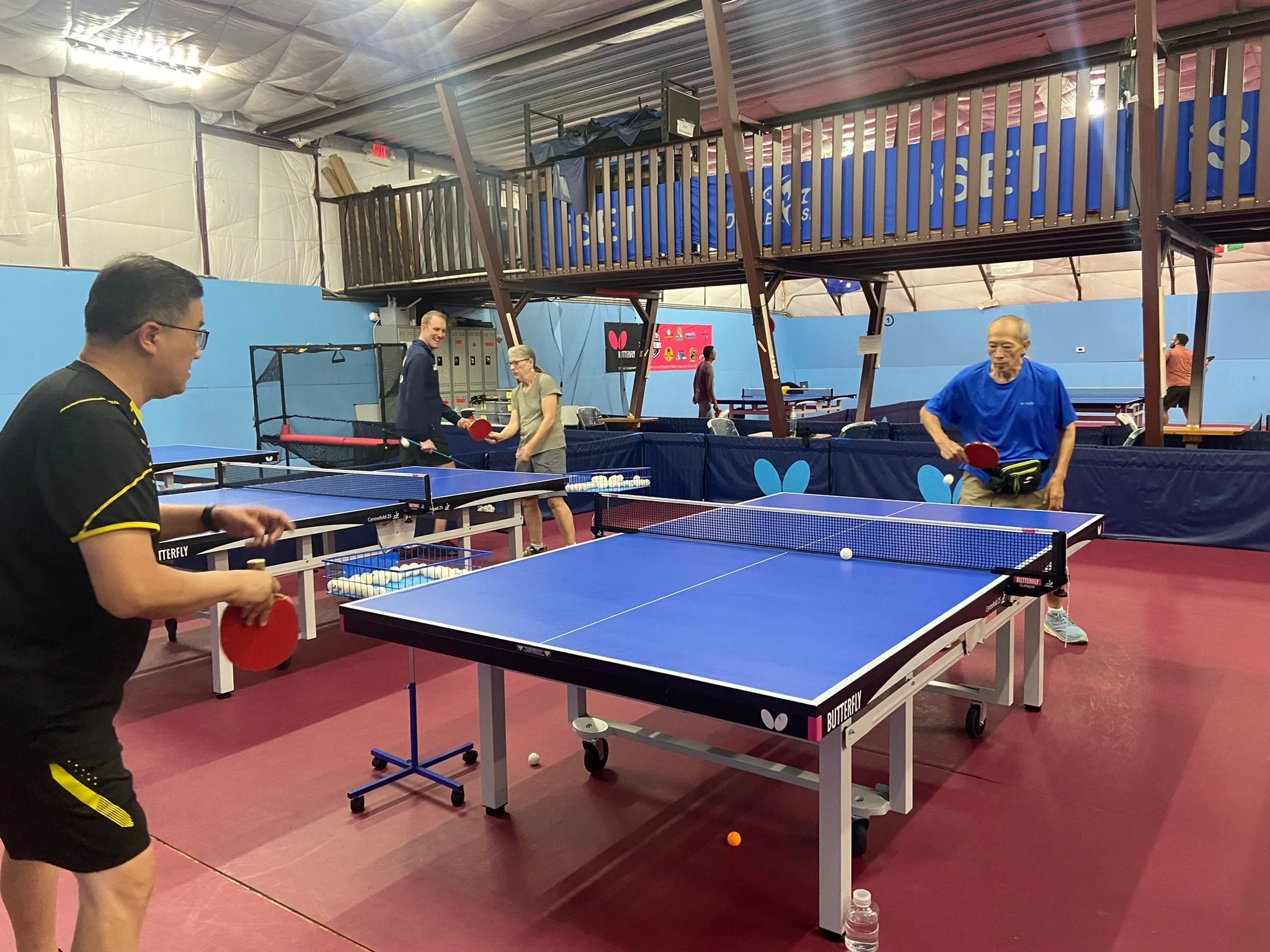
Like all PFP programming, Wednesday’s ping-pong class welcomes players of every level – as it pertains to Parkinson’s progression or table tennis skills – and participants aren’t separated or segmented. For an experienced player to rally with a beginner is a sign of growth for Pavlicek.
“Being good enough to play down to a beginner, keeping a newcomer’s shot alive on the table, is a skill in itself,” he says. “Once I notice someone being able to play down and keep a beginner’s ball on the table, I know they’re reaching that next level of competency in the sport itself.”
With no score being counted, the goal for the class is keeping the ball in motion.
“It’s all about the rally,” Pavlicek says. “If it’s just quick one-twos, you never learn how to change the ball. That’s why I push for long rallies with everyone. It’s not overly competitive in this group class – it’s about keeping the ball on the table. The longer we’re doing that, the more we’re shifting, the more we’re moving, the more we don’t get stuck because we’re always in motion. As long as the ball is in the air we’re in constant motion.”
Here’s to another 200 classes, and to many more rallies ahead!
