What People with Parkinson's Told Us About Staying Active — And Why It Matters
Looking into the “active ingredients” of exercise with two PFP research studies
At the 7th World Parkinson Congress, Power for Parkinson’s had the opportunity to share research focused on a question that sits at the heart of our work: What helps people with Parkinson’s stay active in real life?
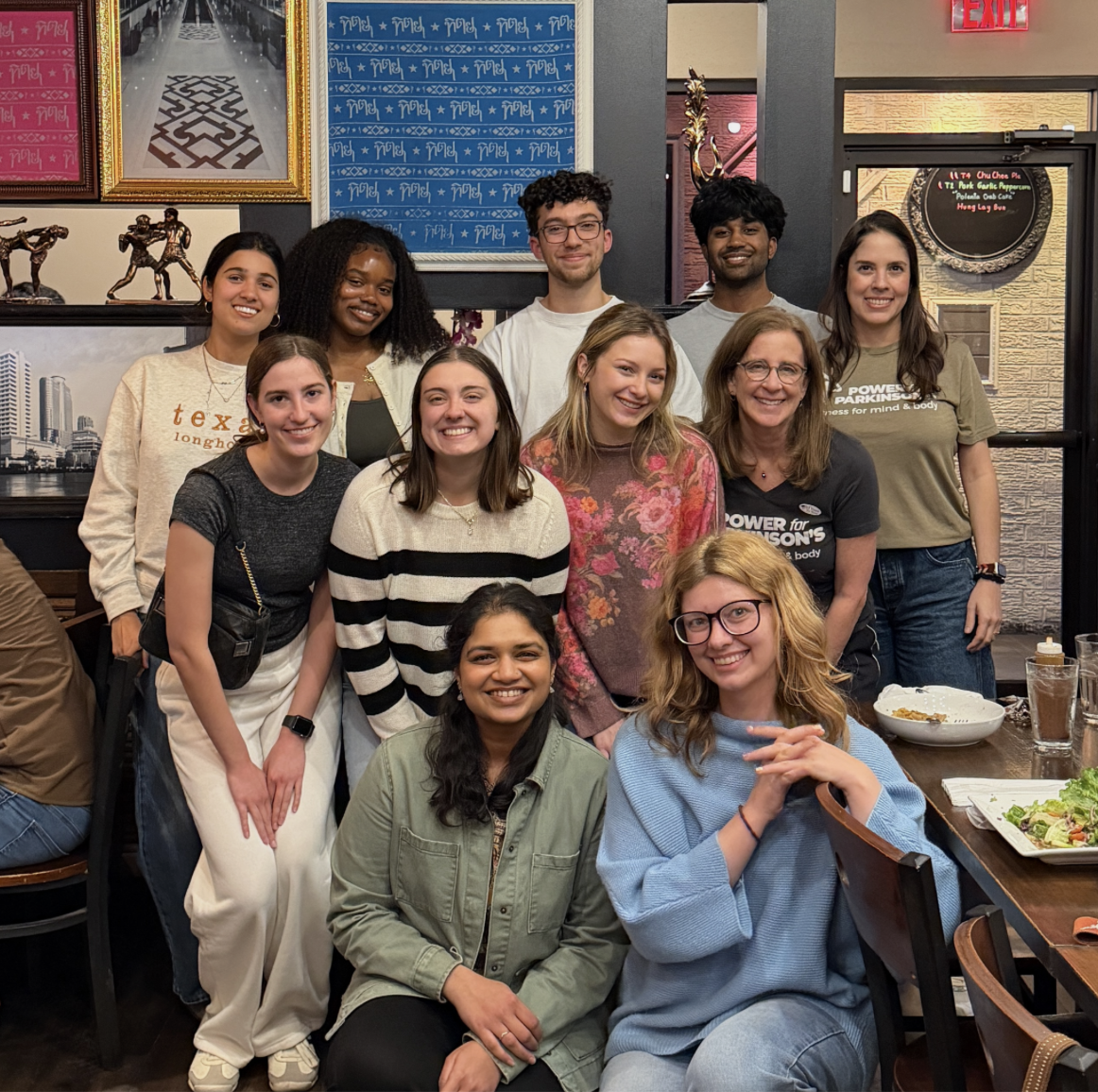
My collaboration with PFP began after volunteering in their Austin classes, where I saw firsthand how exercise, community, encouragement, and routine come together in ways that are difficult to capture in a traditional research setting. Conversations with the PFP team grew into research projects focused on understanding what people value about the program, what helps them keep participating, and what barriers remain.
At WPC, we shared this work through two posters. One focused on the experiences of people with Parkinson’s who attend PFP’s in-person classes, and the other explored the reach and perceived value of PFP’s YouTube channel. Together, the posters allowed us to explore how PFP supports both a local community in Austin and a broader online community exercising from home.
Poster 1: Listening to In-Person Class Participants
Our first poster focused on the experiences of people with Parkinson’s who attend PFP’s in-person classes. This work is part of an ongoing qualitative study that explores why people come to PFP, what makes the classes feel supportive and sustainable, and how participants describe the role of the program in their lives.
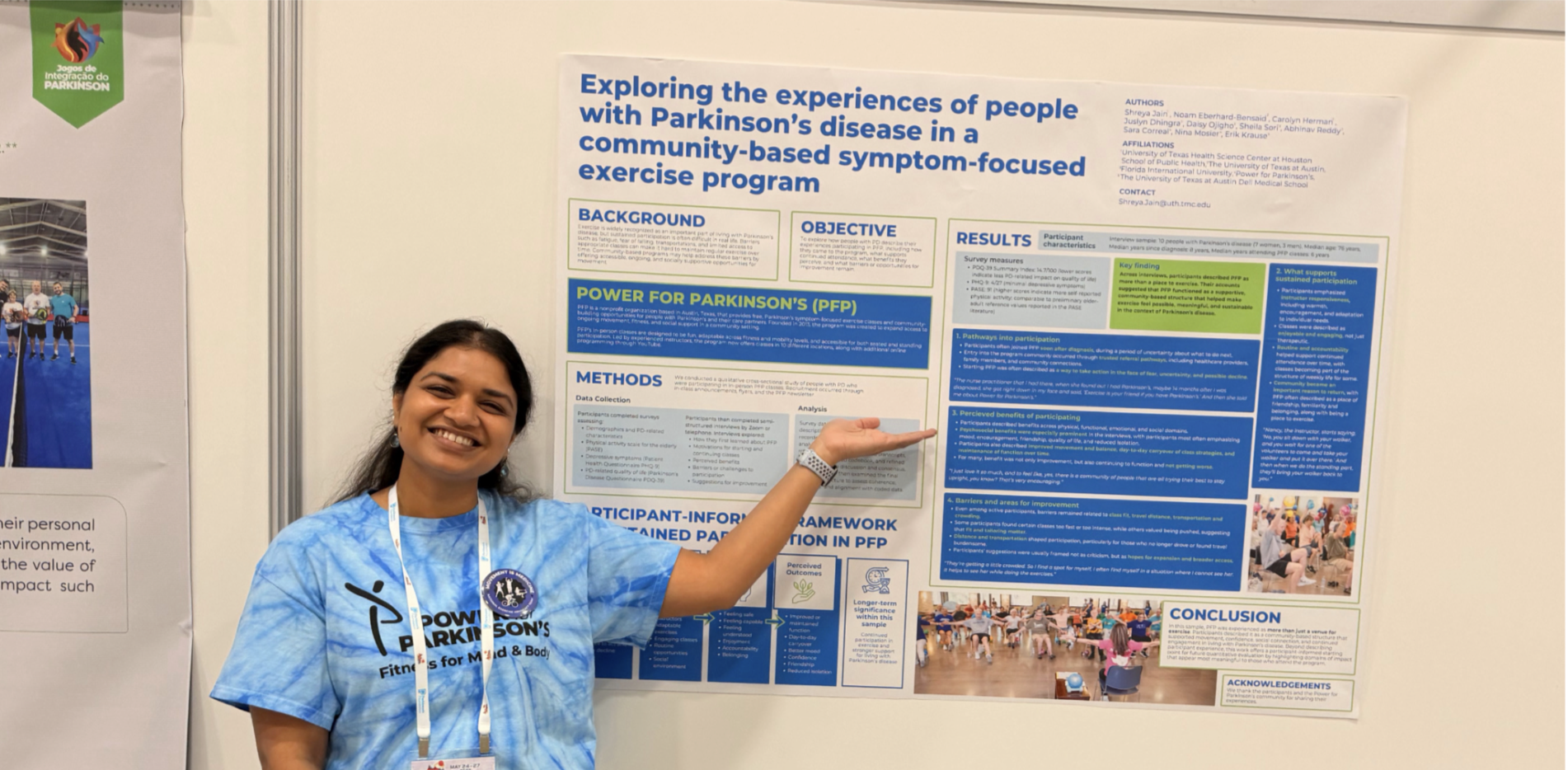
In an extensive collection of interviews with participants in Power for Parkinson’s classes, people described PFP as much more than a place to exercise. Following are some of the themes we found:
Finding PFP during moments of uncertainty: Many people recalled finding PFP after diagnosis, after noticing changes in movement, or after being encouraged by a healthcare provider, friend, or family member to find Parkinson’s-specific exercise.
Having instructors who understand Parkinson’s: Class attendees talked about the importance of knowledgeable, encouraging instructors who can adapt exercises for different ability levels and make movement feel approachable.
Building routine, accountability, and belonging: People described how enjoyable classes, familiar faces, and the sense of being part of a community helped them keep coming back. It was heartwarming to hear stories of friendships formed at PFP that extend beyond the classes themselves.
Experiencing physical, emotional, and social benefits: Some talked about movement, balance, strength, and maintaining function. Others emphasized mood, confidence, motivation, friendship, and reduced isolation. For many, the physical and social parts of the program were deeply connected.
Recognizing barriers that still remain: Transportation, distance, class fit, crowding, fatigue, and symptom fluctuations can all affect participation. These barriers are important to understand because they remind us that accessibility is not a one-time achievement. It is something programs like ours have to keep working toward.
Poster 2: Understanding the Reach and Value of PFP’s YouTube Channel
Our second poster focused on PFP’s YouTube channel and how viewers use online Parkinson’s-focused exercise classes. This work drew on YouTube analytics, survey responses from viewers, and public comments on selected videos. Together, these sources helped us understand how far the channel reaches, how people use the videos, what they value about them, and what barriers remain in an online format.
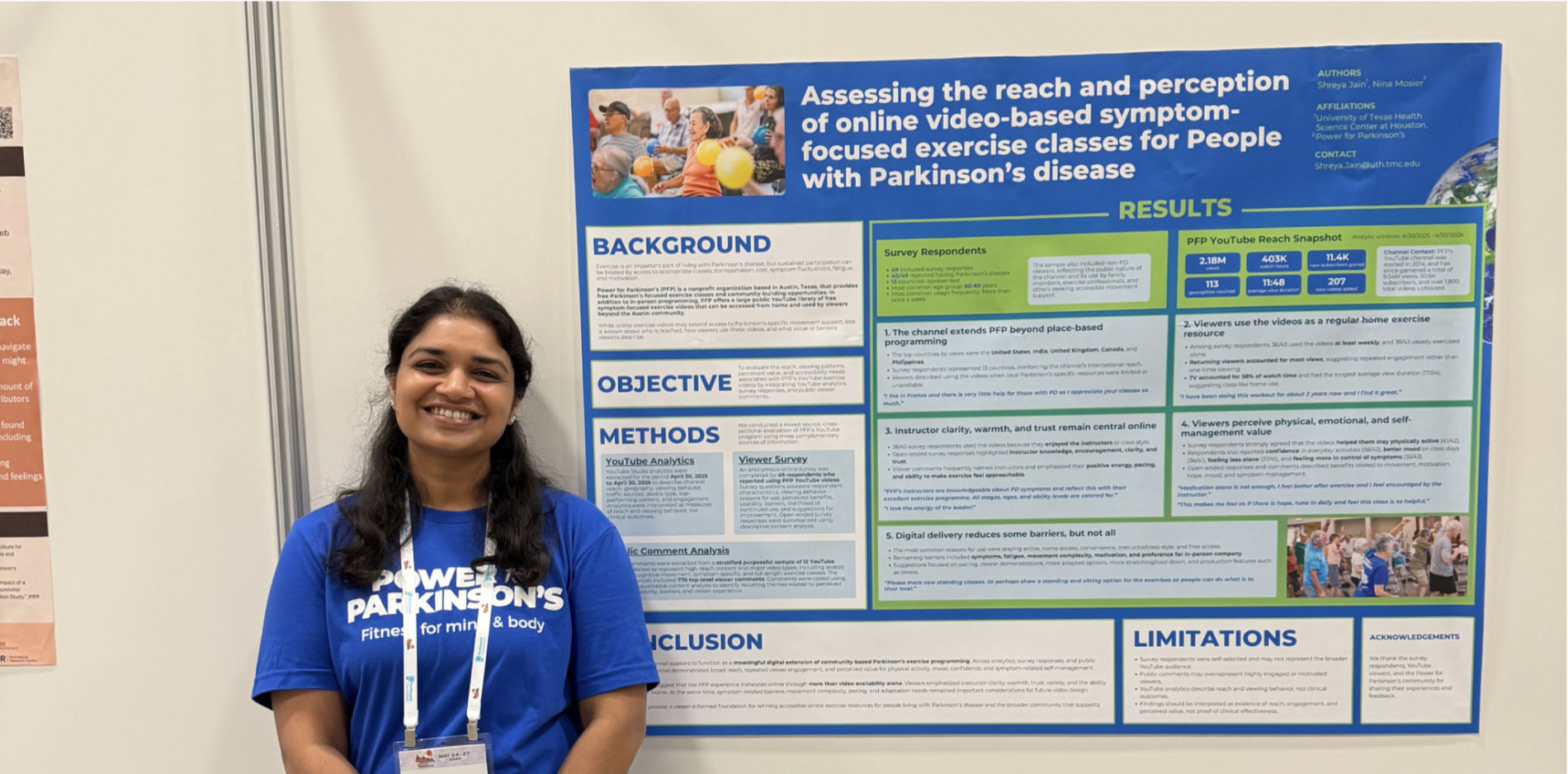
Several themes stood out:
Reaching people beyond Austin: During the one-year period we presented at WPC, PFP’s YouTube channel reached viewers across more than 100 geographies, and people from 13 countries responded to our survey. That reach also came alive in person at WPC, when several people from different countries stopped by our booth and posters to tell us that they watch PFP videos on YouTube. The numbers showed the scale of the channel’s reach, but hearing people describe using the videos in their own homes made that reach feel real.
Supporting regular home-based exercise: Many survey respondents described using the videos because they were free, convenient, accessible from home, and designed specifically with Parkinson’s in mind. For some, the channel filled a gap when Parkinson’s-specific exercise classes were not available locally. Several viewers used the videos as part of a regular routine, often exercising alone at home.
Valuing clear, encouraging instruction: Across survey responses and public comments, viewers emphasized the importance of our instructors who are knowledgeable, clear, encouraging, and easy to follow. Many described the instructors and class style as part of what makes the videos enjoyable and motivating.
Describing physical and emotional value: Viewers reported that the videos helped them stay active, feel more confident, improve their mood, feel more in control of symptoms, and feel less alone.
Identifying barriers that still remain online: Some viewers described difficulty following complex movements, needing more modifications, wanting different pacing, or missing the social connection of an in-person class. These comments point to ways our online programming can continue to become more accessible and responsive to different needs.
What We Are Learning
Across our posters, other presentations, and conversations at WPC, a recurring message was that exercise matters, but so does the environment around exercise. People are more likely to keep showing up when they feel welcomed, understood, encouraged, and part of something.
Together, our posters suggest that the impact of community-based Parkinson’s exercise programs cannot be understood by looking at exercise content alone. One way to think about this is through the idea of “active ingredients.” In medicine, we often use that phrase to describe the component of a treatment that produces its intended effect, but the concept can also help us think about community-based programs. In a program like PFP, the active ingredients may include the exercises themselves, but they also include instructor expertise, trust, adaptability, routine, encouragement, social connection, and the feeling of being part of a community.
For in-person class attendees, that community may come from being in the room with others, seeing familiar faces, and feeling known by instructors and peers. For YouTube viewers, connection may look different, but it can still be present through the warmth of the instructors, the familiarity of returning to favorite classes, and the knowledge that the program was created for people living with Parkinson’s.
These findings point to a practical question at the center of PFP’s work: what does it actually take for people with Parkinson’s to keep moving?
Why This Matters
There is a strong body of research showing that exercise is important for people with Parkinson’s disease, and clinical guidelines increasingly emphasize regular physical activity as part of living well with Parkinson’s. Recommendations, however, are only part of the story. Community-based programs help translate that research into something people can access, enjoy, and sustain in daily life.
Seeing dance classes, boxing programs, cycling groups, wellness centers, and other Parkinson’s-focused organizations represented at WPC reinforced that PFP is part of a larger movement to make exercise more accessible, engaging, and meaningful. PFP contributes to this landscape through its low-barrier, hybrid model of free in-person classes, a large YouTube library, seated and standing options, and programming designed around Parkinson’s-specific symptoms and needs.
The work we presented at WPC is still ongoing and has not yet been published in a peer-reviewed journal. However, sharing these emerging findings helped us connect with others doing similar work, learn from people with Parkinson’s and community programs around the world, and think more deeply about how PFP can continue to strengthen its programs and document its impact. Importantly, this work also lays a qualitative foundation for future research. By listening to class participants and YouTube viewers, we can begin to identify which outcomes matter most to the people using PFP’s programs. Physical activity, balance, and mobility are important, but so are confidence, mood, routine, belonging, motivation, quality of life, and the ability to keep participating over time.
This participant-informed foundation can guide the next phase of research on PFP’s impact and potential mechanisms. In community-based settings, traditional randomized controlled trials are not always practical or appropriate. Programs like PFP are ongoing, flexible, and embedded in people’s real lives. Future work may therefore need to use more pragmatic approaches, including longitudinal surveys, real-world program data, and technologies such as wearable devices to better understand how participation relates to movement, activity, symptoms, and daily function over time.
For PFP, this research is helping build a stronger evidence base while staying grounded in the experiences of the people the program is designed to serve.
Thank You
We are deeply grateful to the people with Parkinson’s who shared their experiences with us, the viewers who responded to the YouTube survey, and the many people who engage with PFP’s programs in person and online.
Thank you to the Power for Parkinson’s instructors, staff, volunteers, and community members who make this work possible every day.
Thank you also to the student research team - Abhinav Reddy, Carolyn Herman, Daisy Ojigho, Juslyn Dhingra, Noam Eberhard-Bensaid, and Sheila Sori - whose careful work supported these projects.
Finally, thank you to the World Parkinson Congress for creating a space where research, lived experience, and clinical care could come together. We left the conference energized and inspired to continue learning from the people at the center of this work.