

June 5 • Written by Kevin Curtin
PFP at the World Parkinson’s Congress
Takeaways, connections, and adventures from our week in Phoenix, Arizona
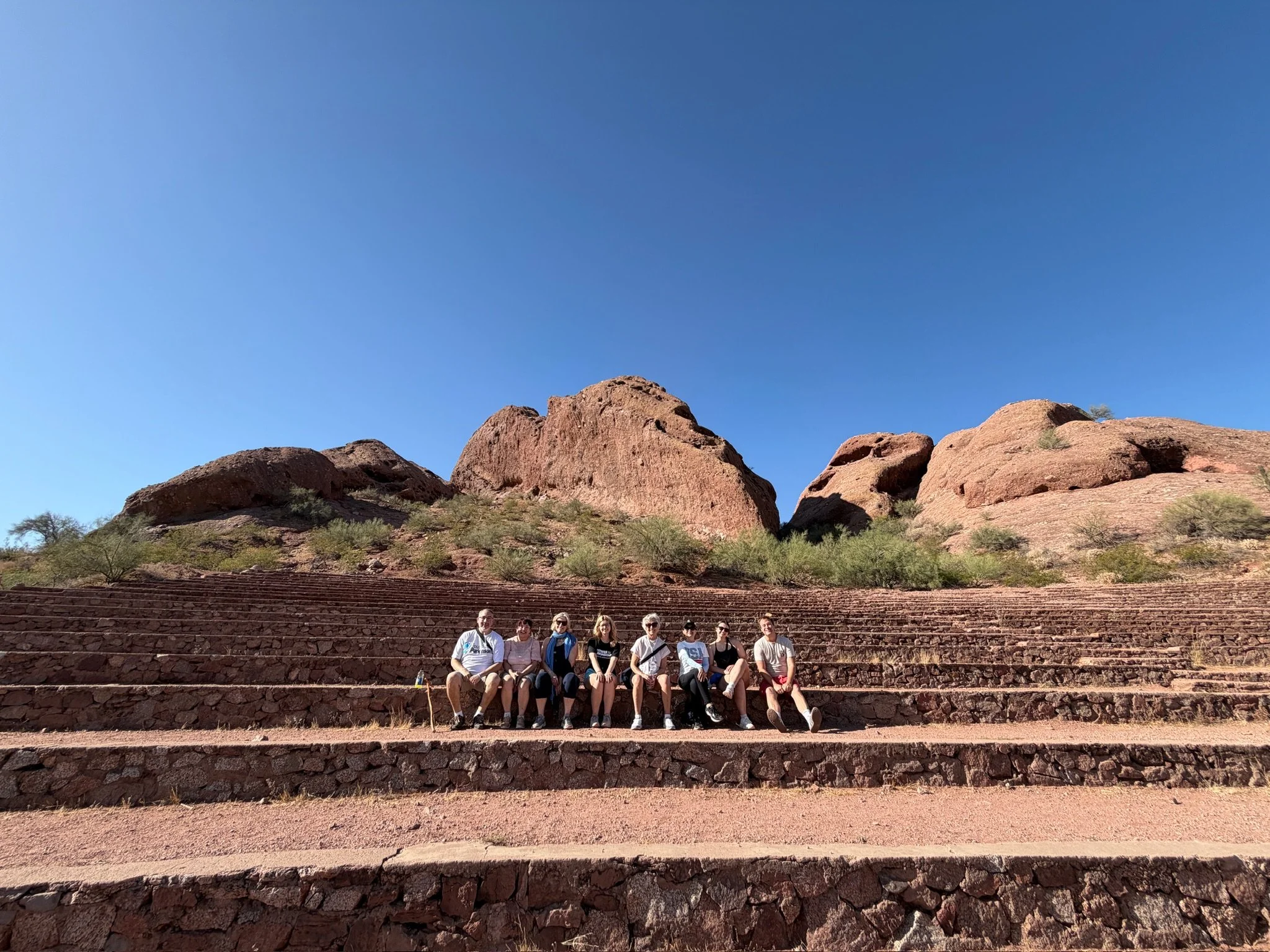
Amongst the giant saguaro cacti and distinctive sandstone formations in Phoenix’s Papago Park, I hiked alongside a new friend: Anne Pearce, who’d traveled from Leeds, England to Arizona for the 7th World Parkinson’s Congress.
“When you’re diagnosed with PD you sort of become a member of a club,” she told me as we strolled through the hilly desert landscape. “It’s not a club that you want to be part of, but then you see that’s a very special community and one that’s very supportive.
For that club, attending the World Parkinson’s Congress is akin to being in Davos, Switzerland for the World Economic Forum. It’s both the brain trust and cultural expo of the Parkinson’s community – attended by neurologists, people with Parkinson’s, researchers, fitness professionals, care partners, physical therapists, and organizers of local PD resources. It’s the kind of event where you might be on the same escalator as a stem cell researcher and a guy with PD who traveled 5,000 miles to improve and inform the weekly support group he hosts in his living room.
This year, taking place in the US for the first time in a decade, the WPC drew nearly 4,000 attendees from 60 countries – with roughly one-quarter of registrants being people with Parkinson’s.
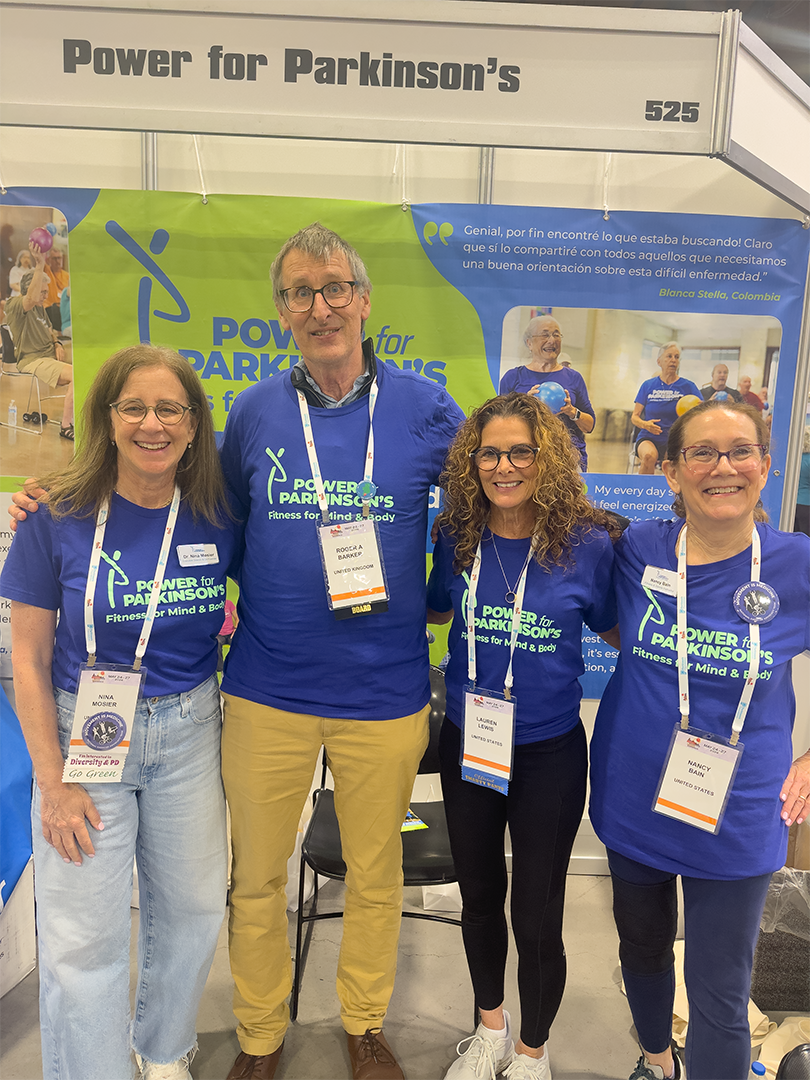
When Roger Barker, a professor of clinical neuroscience at Cambridge – and also President of the board that puts on the WPC – stopped by the Power for Parkinson’s booth to try out some of our brain-body exercises, told me that he sees the place for PhD’s and people with PD to come together.
“For many researchers, they’ve never seen these things called ‘patients,’ in person and seeing that they are people,” he offered. “One thing I can guarantee is everyone will be a patient one day. The best principle in medicine is to treat the patient like you want to be treated yourself and imagine what it’s like on the other side.”
Meanwhile for the people with Parkinson’s, the WPC is a place to empower themselves with information and resources – even if, as many of the lectures confirmed, the future therapies are still years away. As Rebecca Miller, a licensed clinical psychologist representing the Michael J. Fox Foundation, put in while speaking at the event’s opening ceremony: “People can take control of their disease.”
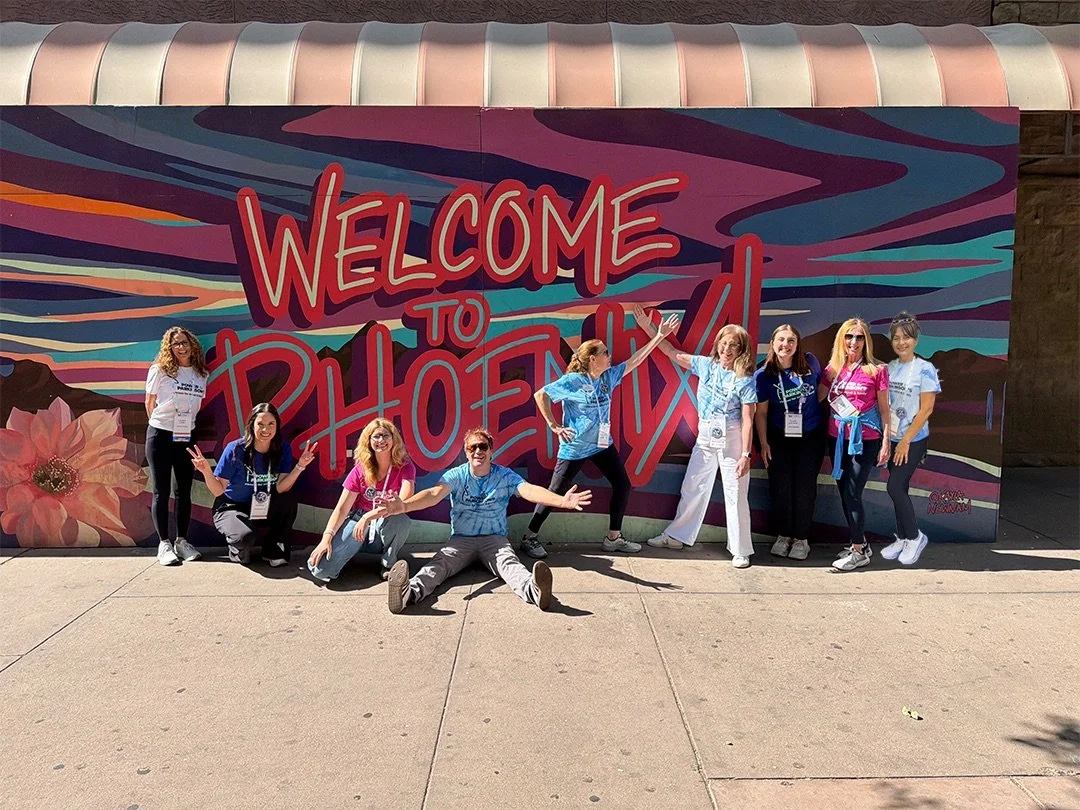
Power for Parkinson’s had our largest ever showing at the Congress – with 11 instructors, staffers, and researchers making the trip. Thus, our team could be found in every area of the Congress – from the lectures, to the stages, to the exercise classes – but our presence was headquartered at a PFP booth in the Movement Village area of the Expo Hall.
Our booth was bustling for three days as attendees came by to learn about our free Parkinson’s fitness resources and participate in a fun activity. Attendees were invited to crack open a fortune cookie, try one of the dozens of different brain-body exercises printed on the slip inside, and then learn which symptoms were targeted. It was a hit.
The popularity of our virtual classes has become such that PFP’s instructors seemed like celebrities at the conference. Lauren Lewis, Polly Caprio, and Lola Ortiz were constantly approached and asked for pictures by people from our online community, who exercise with them on YouTube. It was incredible to see the instructors meeting people from Africa, Israel, Canada, and South America who feel a personal connection to them.
PFP representatives were also included in much of the programming. Our lead dance instructor Nancy Bain performed in an incredible opening ceremony segment titled “Knots and Threads” that was led by Pamela Quinn, a former professional dancer who has lived with PD since 1996.
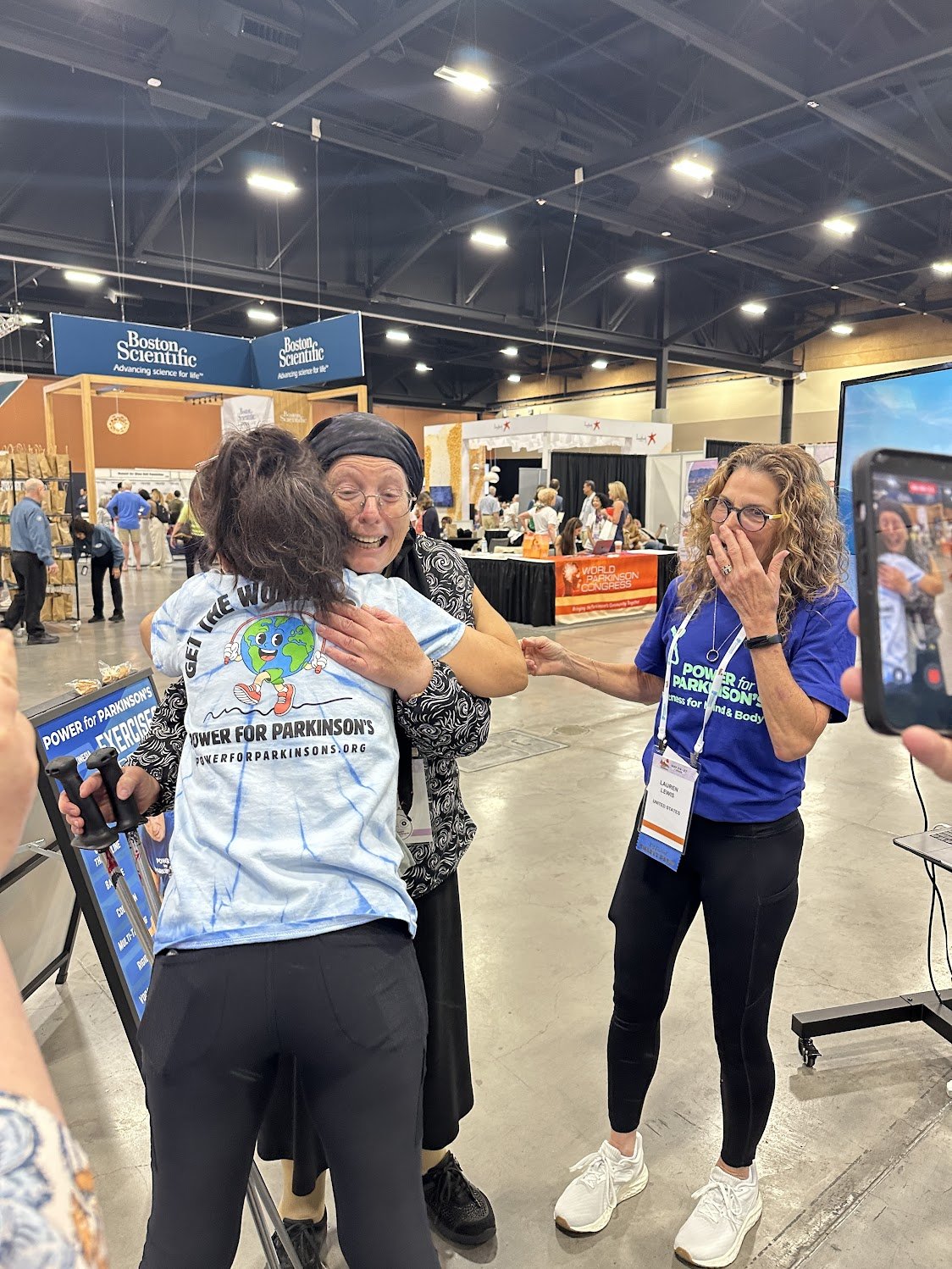
Meanwhile, PFP lead instructor Lauren Lewis – along with our Georgetown class instructor Angie Cervi – headed up a spirited Power for Parkinson’s Move & Shout class that showcased the cognitive, symptom-focused exercise we’re known for to a room of smiling faces.
Another programming highlight were the two Spanish-language exercise sessions led by PFP en Español instructor Lola Ortiz.
The first session was fully organized and led by Power for Parkinson’s, providing participants with a direct experience of our exercise methodology and program approach. Attendees, from all over the Spanish-speaking world, had the opportunity to learn about symptom-directed exercise and engage in movements designed specifically for them in their native language.
The second session was a collaborative Salsa class co-led by Colombian neuropsychologist Beatriz Muñoz from Cali, Colombia. Through music, movement, and social interaction, the class created a dynamic and enjoyable environment that encouraged participation from both Spanish-speaking and non-Spanish-speaking attendees. The music and movement proved a beacon in the second floor of the convention center and participants continued to dance through the doorway and join the class until the room was totally full.
This vibrant Spanish programming was made possible by PFP’s Director of Innovation and Programming, Sara Correal, who took a leadership role in the WPC’s Spanish room – helping to coordinate parallel programming over the course of three days.
Both Spanish sessions sessions fostered a strong sense of community, connection, and joy. Participants actively engaged with one another, shared experiences, and left feeling energized and motivated. Lola’s teaching abilities demonstrated warmth, empathy, respect, and an ability to connect with participants. Her classes were later listed as highlights of the Congress from participants who were there.
It also represented a realization of a long-term goal for Power for Parkinson’s to have a thriving Spanish language program that served people with PD all over the world.
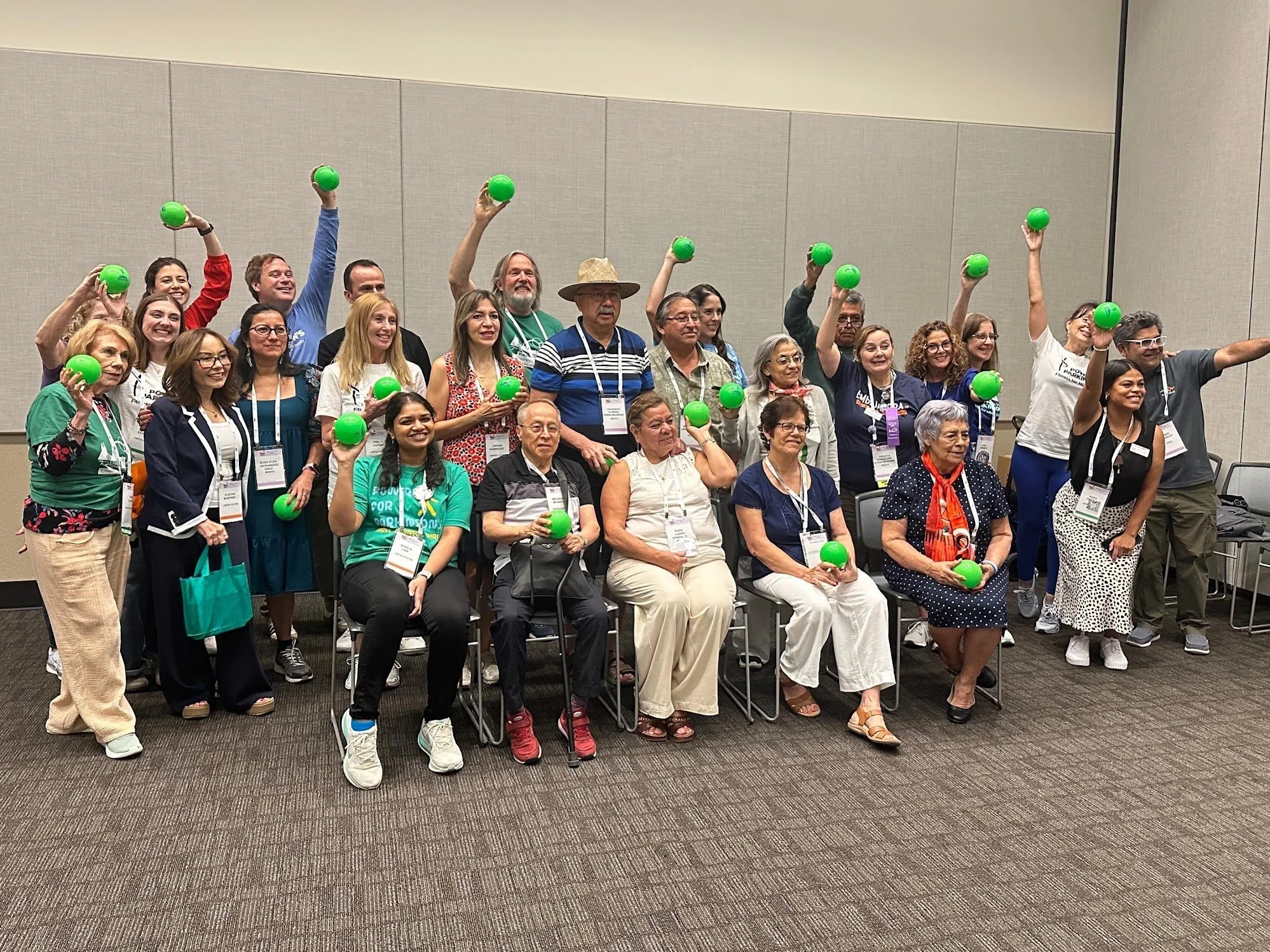
A week after the Congress wrapped, Power for Parkinson’s team is still radiating with the inspiration, knowledge, and connection we absorbed at the World Parkinson’s Congress. As for any event with literally hundreds of sessions, there’s no singular experience of the WPC, but instead a myriad of moments. What follows is a series of reflections and observations from the PFP staff, who were asked what they found interesting, inspiring, or revelatory at the WPC.
Shreya Jain, Power for Parkinson’s Lead Researcher
Shreya also presented multiple posters in the WPC Research Village, which can be seen here and here.
-I attended a session on "Advancing Policy to Become PD-Ready" and was surprised to hear that, despite Levodopa having been around since the 1960s, it still is not available in several countries. The World Health Organization is working on addressing some of these serious gaps that make access to PD treatment a luxury for some. Another takeaway from this session was the power of advocacy and how that requires multiple voices - those with lived experience, researchers, clinicians and advocates – to work together.
-It was clear across multiple sessions and conversations that exercise remains one of the most important tools we have for disease management. However, knowing that exercise is important is not the same as being able to actually execute that in real life. There are lots of barriers, both personal and structural, that can come in the way. This really highlighted the importance of programs like PFP that actually try to implement these exercise and physical activity guidelines by giving people a space and structure to exercise.
- Digital tools and wearable technologies are becoming more important in Parkinson's research. While, traditionally, research is done in a way that standardized assessments are done once every few weeks, wearable devices and smartphones allow researchers to collect data that much better reflects people's behaviors and symptoms in everyday life. This is exciting because wearables and digital tools may help us understand day-to-day changes, activity patterns, exercise effects, and symptom fluctuations more naturally.
-Lastly, based on our conversations across the conference and during our poster sessions, one of my biggest takeaways was that programs like PFP are highly relevant to Parkinson’s care, not only because of their exercise classes, but also because they are creating community, routine, motivation, education, accountability, and hope. These are all things that matter deeply in real life, but they are not always captured in traditional healthcare or research settings. I came out of it with my brain spinning with ideas for how we can try to quantify PFP's impact, and also contribute to a global conversation around the role that community-based programs play in the larger healthcare system.
Angie Cervi, Power for Parkinson’s Instructor in Georgetown, TX
Dance, Movement, and the Brain Connection
The Dance for PD sessions were especially impactful, particularly the Deconstructing Dancing with Parkinson’s session. After participating in a short dance sequence, researchers explained the neurological and physical processes happening during the movements.
A major emphasis was on fine motor control, with examples such as imagining throwing rose petals one at a time or using finger movements to “shimmer” and create sunshine. They highlighted that approximately one-third of the brain’s motor cortex is dedicated to fine motor control, which is why Dance for PD intentionally incorporates detailed hand and finger movements along with imagery.
The use of storytelling and visualization in dance was another powerful takeaway. These elements can improve mood, create emotional connections, and support memory by helping participants recall movement patterns more effectively.
We have often discussed the importance of crossing the midline, but they expanded on why this is especially meaningful for people with Parkinson’s. Since Parkinson’s often affects one side of the body more than the other, cross-lateral movements help promote symmetry while also strengthening communication between the brain and body.
Another interesting point was that dance naturally includes patterns, anticipation, and novelty – all of which are stimulating and rewarding for the brain. Mirroring movements with others also requires turn-taking and self-regulation, helping engage motor systems that may be impacted by Parkinson’s.
The Importance of Exercise Intensity and Purpose
Jimmy Choi’s presentation was incredibly motivating. His message of training for the life you want to continue living – rather than simply meeting minimum exercise recommendations – strongly resonated with me.
One phrase that stood out was: “The research is my minimum.” It challenged me to think beyond simply meeting guidelines and instead ask: What am I doing today that is more than yesterday?
He emphasized the importance of high-intensity exercise, including the goal of spending approximately 45 minutes at 80% of maximum heart rate, 4-5 days per week. Research continues to show the benefits of intense exercise on the brain, including its relationship with dopamine pathways.
Jimmy shared that when he was diagnosed at age 29, he weighed 250 pounds and was advised to do gentle exercise. His doctors warned that he could potentially require a wheelchair by his 50s. Through years of progressive training and commitment to exercise, he has challenged those expectations.
His biggest message was simple, but powerful: the most important exercise is the one that actually gets done.
A Simple but Powerful Walking Cue
One practical takeaway I loved was the walking mantra: “Raise your gaze, swing your wings, and feel your heel.”
It is a simple, visual reminder that encourages posture, arm swing, and intentional foot movement – all important components of walking mechanics.
Reflection on Our Team and Our Mission
My biggest takeaway from the conference was how special our team is. Spending time together learning, exercising, and connecting with others reinforced the level of skill, passion, and care we bring to our Parkinson’s community.
From conversations with attendees at our booth to helping co-teach the Move & Shout class with Lauren, it was clear that we are doing something innovative and different in our approach. Our focus on combining exercise, education, connection, and community truly sets us apart.
I left feeling proud of the work we do and energized to continue providing meaningful experiences for the people we serve.
Sara Correal, Power for Parkinson’s Director of Innovation
Sara oversees PFP en Español and collaborates with many Hispanic PD groups
Unmet Need for Parkinson-Specific Exercise Programs in Spanish
One of the most significant observations from the Congress was that many Hispanic communities still do not have access to Parkinson-specific exercise programs similar to those offered by Power for Parkinson’s. While physical therapy services and general exercise programs are available in some regions, comprehensive symptom-directed exercise programs tailored specifically to Parkinson’s disease remain limited. This reinforces the importance of continuing to expand and promote our Spanish YouTube classes, which provide accessible and evidence-based exercise opportunities for Hispanic individuals living with Parkinson’s.
Strong Interest in Collaboration
Organizations currently serving people with Parkinson’s demonstrated a strong willingness to collaborate and maintain ongoing communication with Power for Parkinson’s. There is a clear opportunity to keep building strategic partnerships that can increase awareness of our programs, expand our reach, and improve access to Spanish resources for the Hispanic Parkinson’s community.
Continued Validation of Exercise as a Key Intervention
Across multiple sessions and panels, experts consistently emphasized the importance of regular physical activity for managing both motor and non-motor symptoms of Parkinson’s disease. The research and discussions presented at the Congress continue to support the core principles of the Power for Parkinson’s exercise method and reinforce the value of our symptom-directed programming.
The Critical Role of Care Partners and Families
The Congress highlighted the essential role that caregivers and family members play in supporting individuals living with Parkinson’s, particularly within Hispanic communities. Parkinson’s affects the entire family system, and this reality was evident throughout many discussions and personal stories shared during the event. As a result, providing educational, emotional, and support resources for care partners remains a critical component of serving the Hispanic Parkinson’s community.
Increased Visibility Among Spanish-Speaking Attendees
Many Spanish-speaking individuals living with Parkinson’s who attended the Congress were not previously familiar with Power for Parkinson’s. The event provided an excellent opportunity to introduce our programs, build relationships with participants and organizations, and share information about our expanding Spanish offerings, including our new Zoom classes designed specifically for Hispanic Parkinson’s communities.
Polly Caprio, Power for Parkinson’s Instructor in Lakeway and Spicewood
The WPC filled my mind, heart and soul with information, ideas, inspiration and connections with people from around the world!
The Music Leadership Workshop highlighted the positive impact of music for people with PD, whether it be using music with exercise or just listening to music in our daily lives. The researchers noted that the best music is subjectively chosen by each individual. One person may respond favorably to one genre of music while someone else may respond favorably to another genre.
We were given a kazoo and a harmonica lesson--both good instruments to play that can help with breath control/respiratory function, lung capacity, saliva management and improvement of swallowing. They also strengthen the diaphragm and, wow, they were so fun to play!
Music activates multiple areas of the brain. Rhythms can help us with movement and gait. Singing is an excellent activity for people with PD as well.
There was a recurring theme that exercise is indeed medicine and that a holistic approach is essential in managing Parkinson’s – utilizing medications, DBS, occupational therapy, physical therapy, music, dance and art (to name a few).
It was such a privilege to attend the WPC – so much energy and hope and love!
Nancy Bain, Power for Parkinson’s Lead Dance Instructor
On Dance at the WPC
In general, I observed that all of the dance wellness classes were not only well-attended, but were filled with joyful participants. Everyone who participated seemed to walk away feeling energized, excited and happy, and more connected to the other participants.
Also, the dance performance that I participated in was very well received. Thirty-six dancers, most of whom were PwPD, presented a beautiful three minute dance choreographed by dancer/choreographer/teacher and PwPD Pamela Quinn.The piece, “Knots and Threads”, expressed the “red thread” theme of the conference and the deep connection we all feel toward each other in the Parkinson’s community. There is nothing like performing with a group of people to cement connection, caring and respect for one another!
I attended the Deconstructing Dancing with Parkinson’s for PwPD lecture, in which neuroscientist Dr. Judith Beck noted that “the act of watching movement can help with movement and enhance it,” while adding that mirroring activities, which are often done in dance classes, encourage turn-taking and inhibitory control for people with Parkinson’s. Dr. Beck also pointed out that dance and music helps with rhythmic processing, which is affected in PD, and also with both large and small movements. On that same panel, Movement Disorder Specialist Dr. Priti Gros further expounded on how the external cueing of music helps with the natural internal metronome that PwPD tend to lose: “dance often uses the mesolimbic system in the brain (responsible for motivation, desire, and reward) as it encourages anticipating feelings and anticipating ‘rewards.’” One astute attendee at that panel pointed that moving together to music is among the most ancient practices: Soldiers have marched to music for a reason for centuries; and, on D-Day, a bagpiper was sent out to play for the soldiers as they landed.
I also visited Dancing For Parkinson’s founder Sarah Robichaud’s poster in the Research Village, entitled Core Elements of Dance for PD/ Dancing with Parkinson’s. The poster highlighted the specific Parkinson’s related benefits of dance: “imagery and storytelling; music and rhythmic auditory cueing to support movement timing and coordination; bilateral, midline crossing and large-amplitude movements; fine motor activation through hand gestures and facial expression; social mirroring; and partner-based movement.” Per Robichaud’s research findings, this integration benefits patients because it engages multiple neural circuits. “Together, these elements may integrate motor, cognitive, emotional, and social processes, highlighting the multimodal nature of the intervention.”
Here are some other lectures and panels that Nancy attended, plus her takeaways from them.
Assessing the accuracy and timeliness of medication administration for hospitalized patients with Parkinson’s disease.
Speaker: Jake Plagenz (USA)
Takeaway: Even a 30 minute mis-timing of medication administration can lead to a longer hospital stay, re-admission and poorer outcome for the patient. It can also increase the likelihood of falls. Recommend a multidisciplinary approach including increased nursing education regarding patients with PD, consistent logging the timing of medications, allowing for the self-administration of PD medications by the patient when appropriate, and other evidence-based solutions. The timing of Parkinson’s medication administration is crucial to better outcomes and best practices in hospitals.
Predicting Parkinson’s Disease: Exploring Prodromal Disease Algorithms in PREDICT-PD.
Speaker: Ashvin Kuri (UK)
Takeaway: This 10-year-running project that attempts to identify people at high risk for Parkinson’s Disease looked at non-motor features of the disease, like R.E.M. sleep disorder and olfactory loss (smell). It concluded that no single factor is “predictive.” Current data shows that the risk for PD seems to accumulate as patients get older.
Both PREDICT-PD and MDS programs use algorithms and PREDICT-PD has been going for 10 years. I think they need to integrate genetic components into these studies.
Is Exercise Neuroprotective in PD? Evidence from clinical trials
Speaker: Daniel Corcos (USA)
Takeaway: There is a link between exercise and increase in cognition, as seen over 18 months in the SPARX 3 study using high intensity exercise; lowering cortisol levels and inflammation is important; PwPD should be exercising 3-4 days a week where they increase their heart rate to 80-85%; exercise should include dual tasking.
The syn-sleep study: detection of cutaneous phosphorylated alpha-synuclein in REM sleep behavior disorder.
Speaker: Christopher Gibbons (USA)
Takeaway: Can we predict Parkinson’s and types of PD (Lewy Body, etc.) using skin biopsies at the back of the neck, back of the knee, back of calf? The study, so far, has found a high percentage of individuals with PD and Parkinsonisms had phosphorylated α-synuclein (a biological process like an on/off switch in cells), which they detected through biopsy. It now needs to be validated with testing in general populations.
A ‘deep dive’ into trials of ‘regenerative’ therapy
Speaker: Claire Henchcliffe (USA)
Takeaways: After 1998, when stem cell research began, researchers looked at whether stem cells could make dopamine. In 2017, Weil-Cornell Medical Center performed the first surgery on a patient using their own stem cells; then, in Kyoto, Japan, used donor stem cells (note that Japanese population is highly immunologically matched). Two Phase I trials were published in Nature Magazine in 2024. The surgery for stem cell transplant is similar to DBS and includes a probable need for long term immunosuppression. So far, they are seeing some improvements.
Claire Eastman, PFP’s Community Program Assistant
The WPC created a remarkable environment of connection, hope, education, and growth. Collectively, Team PFP met hundreds of people, attended dozens of informational sessions, led three successful fitness classes, and distributed countless flyers. We had the privilege of meeting and building relationships with inspiring individuals across all areas of Parkinson's research, leadership, wellness, advocacy, and beyond. It was incredible to meet people who exercise with us online every week from all over the world – and equally energizing to introduce PFP to those who had never heard of us before.
In a session focused on healthy lifestyles, experts in exercise and nutrition explored behavior change through the COM-B model – a behavioral framework that identifies capability, opportunity, and motivation as the three essential components for any behavior to occur. In other words, a person needs the physical and psychological ability to perform a behavior, the external conditions that make it possible, and the internal drive to follow through. Applying this framework to exercise sheds light on what it truly takes to build a consistent habit. Experts recommended choosing activities you genuinely enjoy, as enjoyment is one of the strongest predictors of long-term adherence. Beyond enjoyment, it's important to maintain a reasonable level of challenge – your routine should push you, but remain within your safe capabilities. The same principles apply to nutrition: eating foods you enjoy and have easy access to makes it far more likely that you'll sustain healthy eating habits over time. Finally, your physical and social environment plays a critical role – when your surroundings support your goals, you're far more likely to succeed.
In support group sessions, I had the opportunity to connect with group leaders from around the world and learn about their approaches to leadership. Some groups had as few as 2 – 3 members, while others had 60 or more, but all of them shared a deep commitment to keeping their communities lively, fulfilling, and welcoming. Many were being led by people living with PD themselves, driven by a desire to create the best possible experience for those around them.
Lastly, exercise remains at the heart of so many conversations about managing Parkinson's. Throughout the conference, we received powerful validation that the programming and methods PFP provides are essential for symptom management and grounded in community. Voices across the conference spoke with conviction about the profound impact of movement on the brain and body — and how a sustainable, intentional routine has the power to change lives.