Power for Parkinson’s Strengthens Vocal Power with New Singing Class
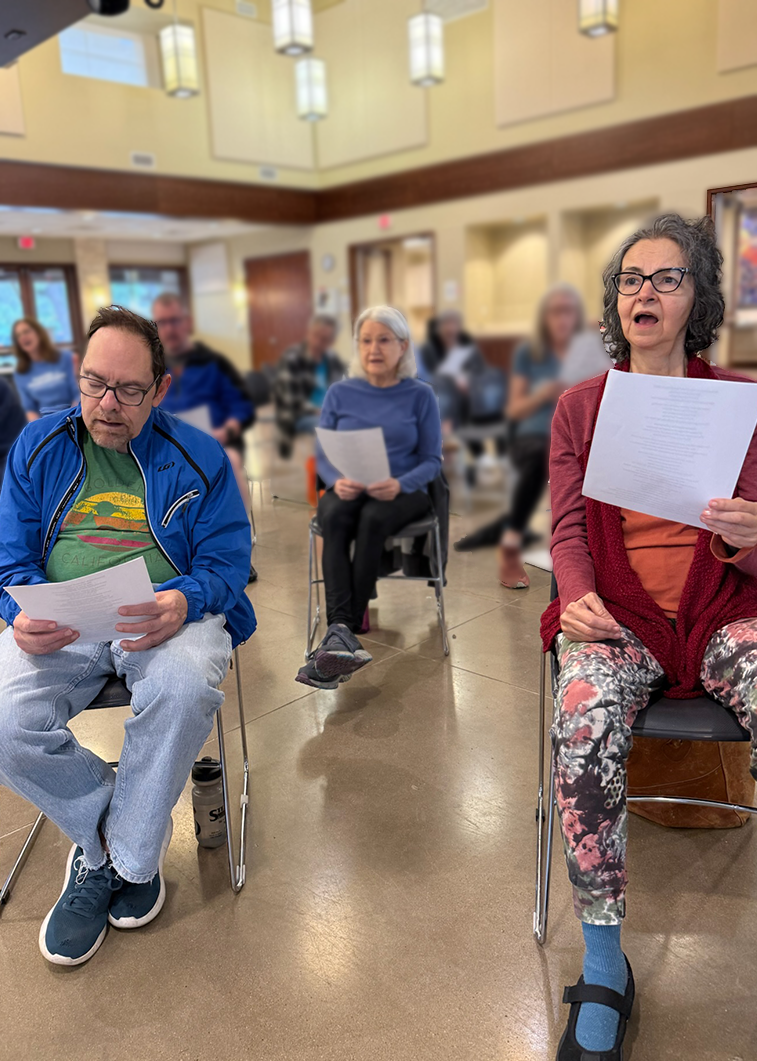
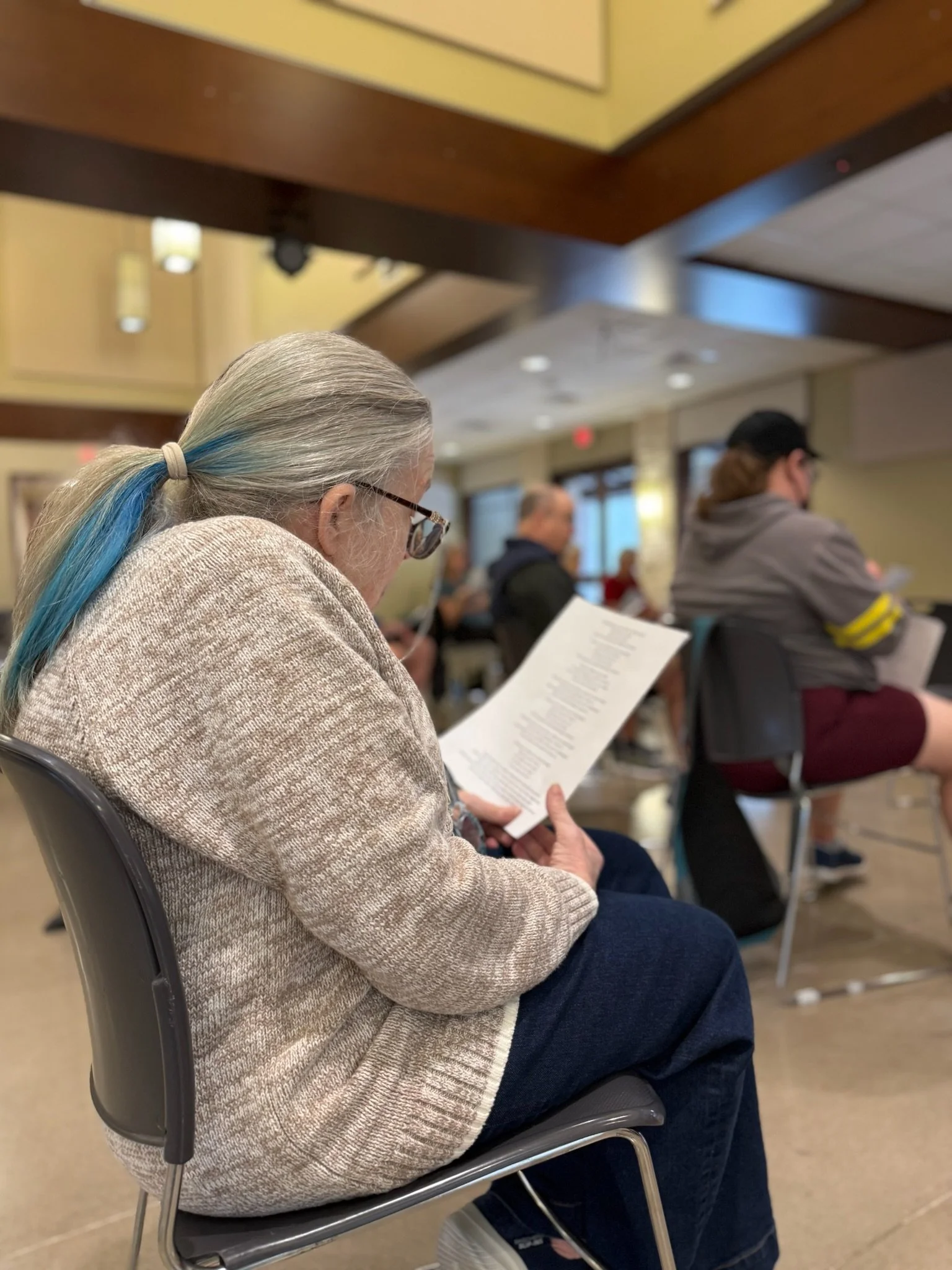
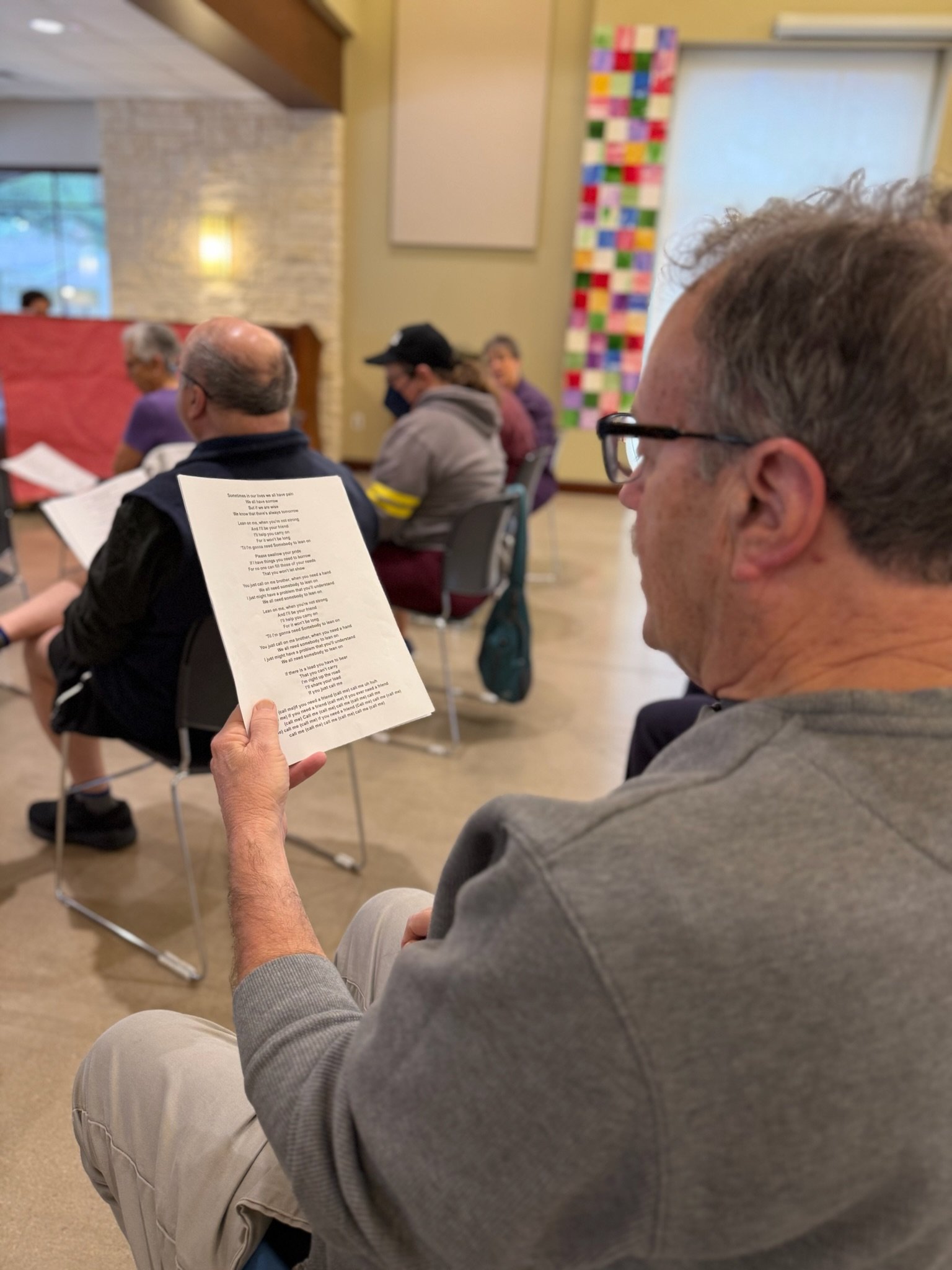
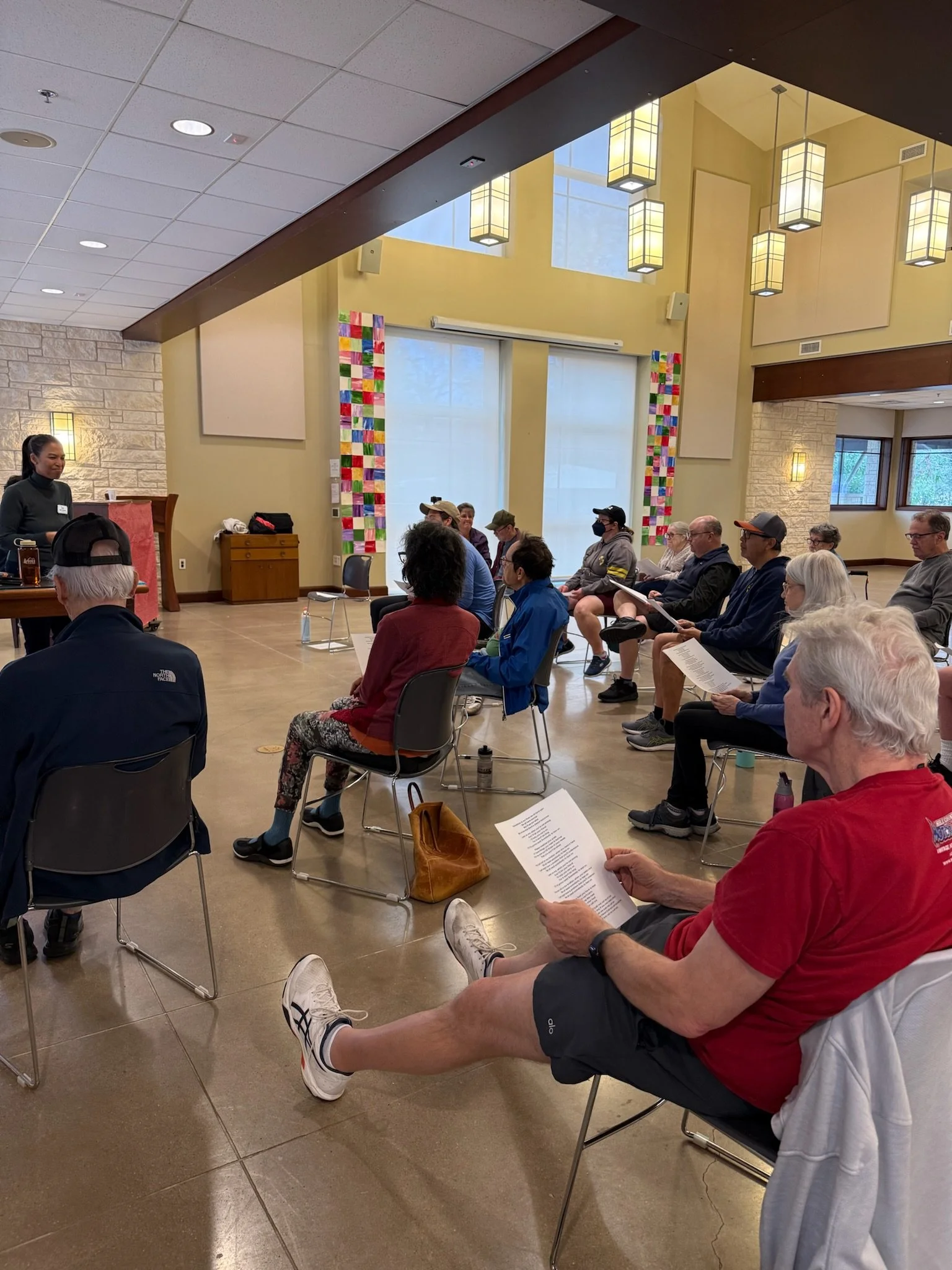
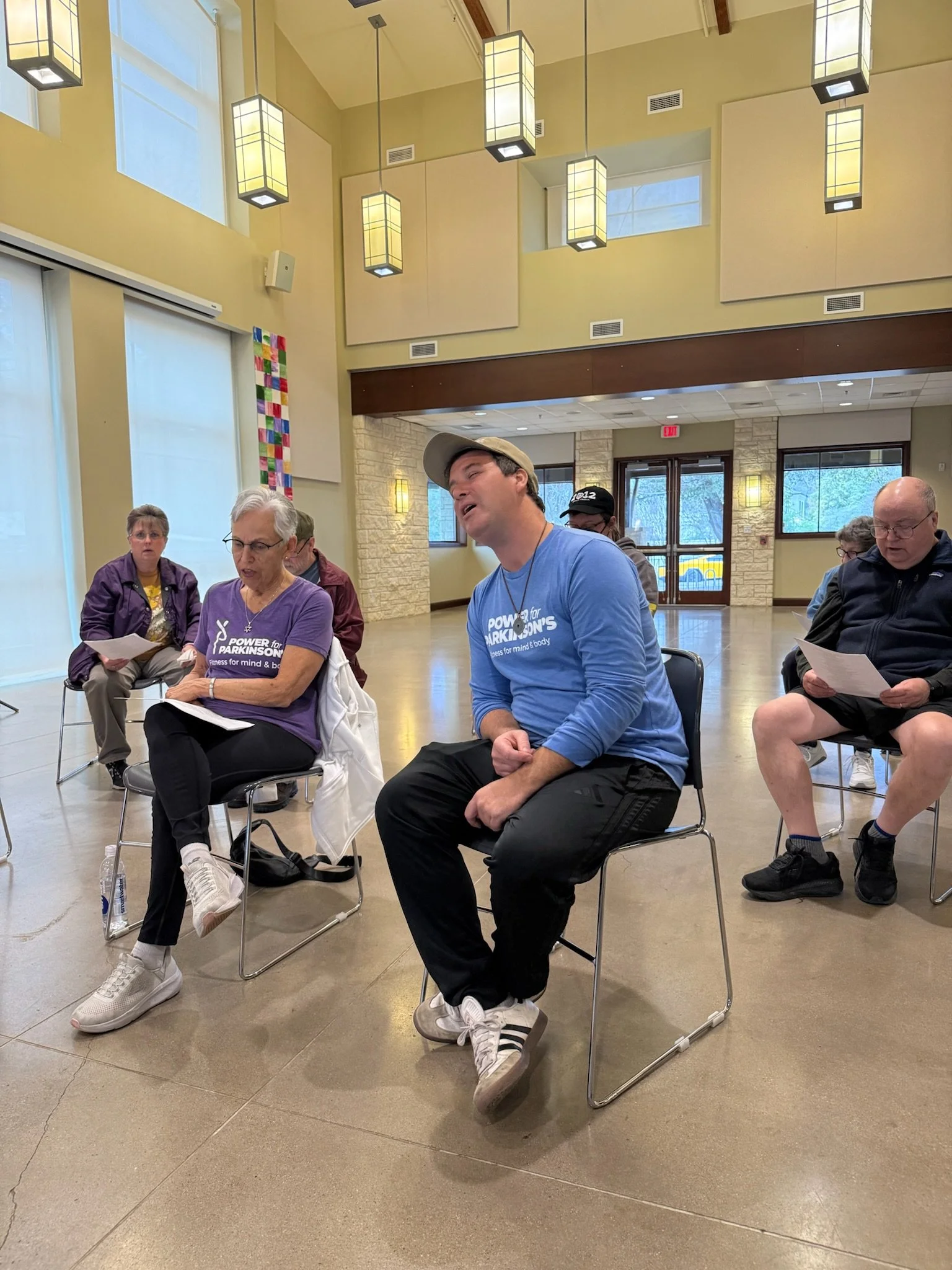
On Tuesday mornings in Austin, you can find 15 to 20 people gathered around an upright piano at the Westminster Presbyterian Church, singing familiar songs like “Lean on Me,” “Hey Jude,” or “What a Wonderful World.” A few of them have choral backgrounds, while others have never sung outside of their shower curtain. The thing they all have in common, though, is a desire to work on their vocal strength, which is commonly impacted by Parkinson’s.
A great majority of people diagnosed with PD experience speech and voice impairments and they are among the earliest signs of motor impairment for patients. The characteristic soft voice of Parkinson’s is caused by stiffening muscles in the chest and throat, reduced breathing coordination, bradykinesia making vocal production smaller, and difficulties perceiving the volume of one’s voice.
“Most people with Parkinson’s aren’t even cognizant that their voice is quiet,” a speech language pathologist, who has specialized in Parkinson’s for decades, recently told me. “I have to record our conversations and play it back to them, or use a decibel reader to show them how quiet they are.”
The speech therapists who treat people with PD have a curious, almost counterintuitive, mantra: “Don’t do what feels natural.” That’s because, what feels normal, is often very quiet. They tell their patients to be loud and use their voice with intent.
So, if you need an excuse to be loud and use your voice with intent, we invite you to come sing with us at Power for Parkinson’s Vocal Power Hour. The class takes place every Tuesday – except the third Tuesday of the Month – from 9:30 to 10:30am at Westminster Presbyterian Church in Austin (3208 Exposition Blvd). Like all PFP classes, it’s free and open to all people with Parkinson’s, plus their family and care partners.
Each class includes vocal loudness practice, facial muscle exercises, singing warmups, and group singing. It’s led by Bernie Muegel, President of the SoCo Women’s Chorus, and musician/instructor Josh Mosier who provides accompaniment on piano. PFP staffer Kevin Curtin assists with the class.
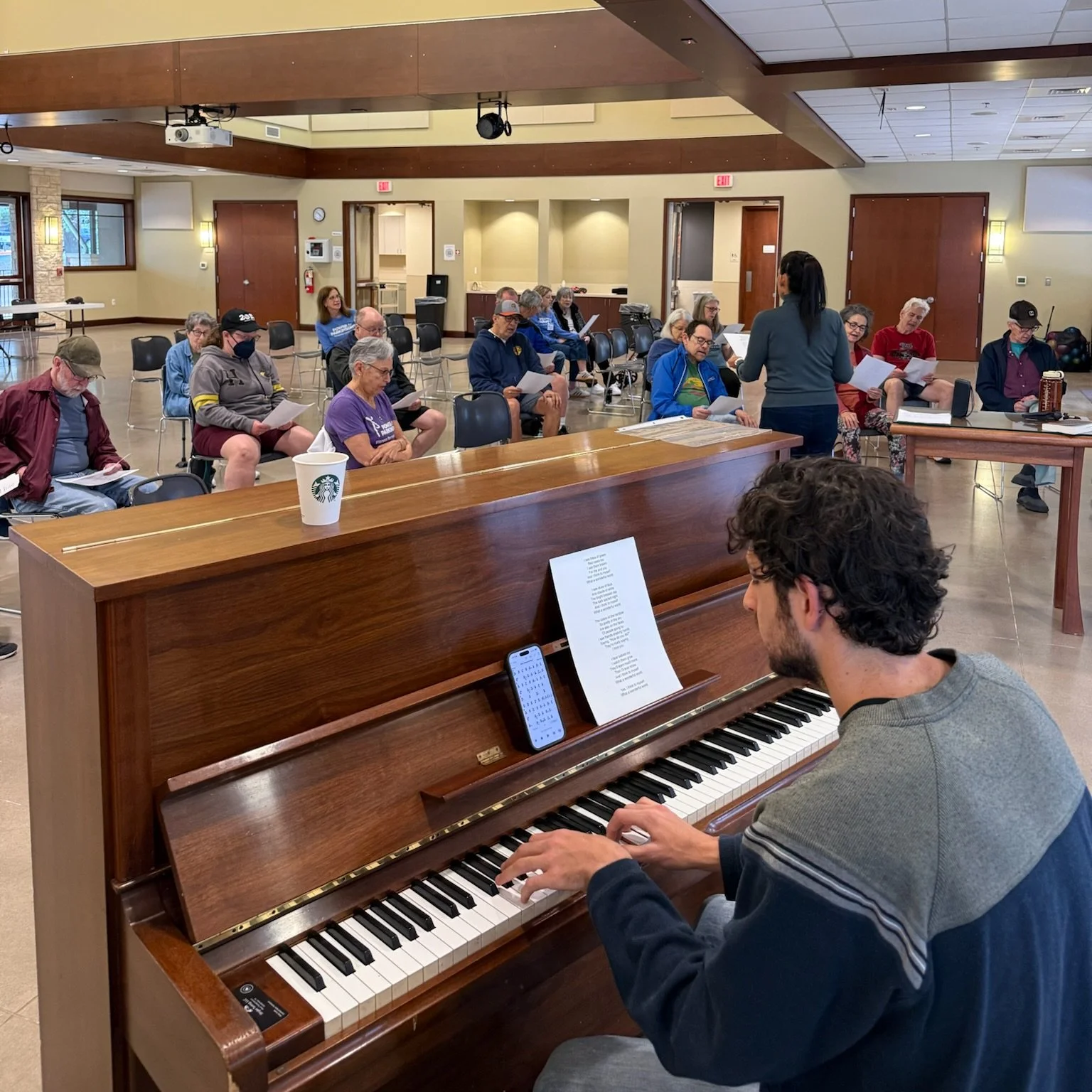
While Vocal Power Hour is, by standard definitions, an exercise class – in that we’re practicing a physical activity to sustain or improve aspects of our health – it holds deeper significance. When our voices come together, we become closer; we feel our worries and insecurities dissipate; and we experience that incalculable chemistry in which the whole is greater than the sum of its parts.
“Singing isn’t just ‘feel-good’ – it’s a functional therapy that improves voice, breathing, brain engagement, and emotional well-being,” says Muegel. “Singing together is transformative. You can see the spirits of the entire class lift the moment the song ends and the smiles break out.”
The launch of the Vocal Power Hour preceded several major news outlets lauding the health benefits of singing.
Earlier this month, NPR’s Here & Now ran a segment entitled Singing Is Good For Your Health. In it, Elinor Harrison, a neuroscientist and dance instructor at Washington University in St. Louis, discussed the measurable effects of singing.
“There’s a lot of research to show that singing, alone or in groups, is beneficial to your health,” said Harrison. “Singing is also a very physical activity. It can be thought of as light exercise – it engages the whole body. It can be done even seated so it’s very accessible to everyone. And it has a whole host of health benefits: it can strengthen the lungs and diaphragm, help with breath control and support. It also increases oxygen to the blood so it improves vascular health, it improves the immune system, and certainly it improves the mood and reduces stress. When we’re singing together, it boosts mood, it produces feelings of connection, and it helps us bond.”
The previous week, the New York Times ran a story about a recurring singing circle in Amsterdam for people experiencing a cognitive decline. Dutch neurologist Bas Bloem, who specializes in Parkinson’s, said in the article that scientific data is increasingly validating the “many healing powers associated with music and dance,” including the production of dopamine.
That article also quoted author David J. Levitin, who frequently writes about the medicinal power of music. He called group singing “an especially poignant and distilled version of a range of music therapies” and added that “When we sing together it releases dopamine, which is part of the pleasure network, and it releases oxytocin, which helps us feel bonded and connected to one another.”
Levitin’s 2024 book I Heard There Was a Secret Chord also extolled the repetitive qualities of music as a useful replacement for the internal timing that people with PD as their basal ganglia degrades, thus making rhythmic activities like walking, clapping, and doing jumping jacks more challenging.
“Music compensates for the loss of control by the basal ganglia, and in addition, music enhances movement synchronization.”
All that in consideration, there are lots of reasons for people with Parkinson’s to sing. Whatever that reason is for you, we have a seat waiting for you around the piano on Tuesday mornings.
_________________________________________________
Vocal Power Hour takes place at Westminster Presbyterian Church every Tuesday morning at 9:30am – except on the THIRD TUESDAY of the month, during which we hold support groups.